Listen on:









Episodes
Tuesday Jan 21, 2025
Tuesday Jan 21, 2025
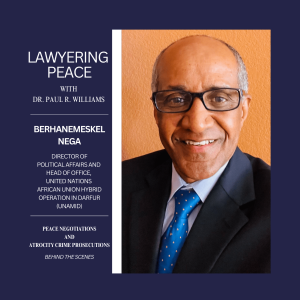
In this episode of Lawyering Peace, Berhanemeskel Nega, a seasoned diplomat with over 35 years of experience in multilateral diplomacy, mediation, and peacekeeping, takes us inside the challenges and lessons learned from the UN-AU hybrid peacekeeping mission in Darfur (UNAMID), where he served as Director of Political Affairs and Head of Office in Darfur from 2014 to 2020.
Drawing on his leadership roles in multiple UN missions, including as acting head of the UN integrated peacebuilding operation in Sierra Leone, Nega reflects on the complex political, humanitarian, and security context of Darfur during UNAMID’s tenure (2007–2020). He discusses navigating a resistant Sudanese government under Omar al-Bashir, the challenges of implementing the UN’s mandate, and the vital role peacekeepers play in protecting civilians in the world’s most volatile regions.
Nega critiques structural inefficiencies within the United Nations and highlights the inadequate legal protections for peacekeepers under international law, which left those charged with safeguarding civilians vulnerable to becoming targets themselves. Through his deep knowledge of peacekeeping in Darfur and Sierra Leone, Nega emphasizes the importance of addressing the root causes of conflict, rather than relying on superficial peace efforts, and examines the evolving role of the international community in building sustainable peace.
Monday Jan 20, 2025
Monday Jan 20, 2025
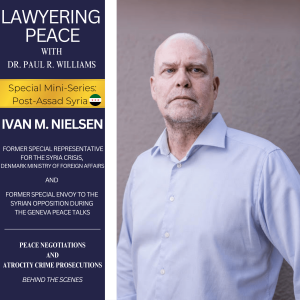
In this insightful episode in our Mini Series on Post-Assad Syria, we welcome Ivan M. Nielsen, a seasoned Danish diplomat and former special representative for the Syria crisis. Drawing on his extensive experience in conflict resolution, human rights, and constitution building, Ivan reflects on lessons from the Geneva peace talks and shares his assessment of Syria’s evolving governance landscape.
From the Assad regime’s divisive tactics to the challenges of engaging with Hay'at Tahrir al-Sham (HTS) under its current terrorism designation, Ivan explores the critical tracks that must be advanced in parallel for a successful Syrian transition: security, service delivery (including education, electricity, healthcare, transportation, and infrastructure), and civic space (politics, governance, and civil society). He underscores the importance of the international community listening to Syrians to understand their needs, avoiding the imposition of rushed timelines for essential governmental transitions, and ensuring external support aligns with Syrian priorities rather than Western-driven agendas.
Tune in for an engaging discussion on the road ahead for Syria, including the obstacles, opportunities, and how hope and unity are shaping the vision for a post-Assad future.-------------------
Syria has entered a transformative moment. After over a decade of devastating civil war, the Assad regime has been overthrown, marking a seismic shift in the nation's trajectory. While this moment brings immense hope, it also presents profound challenges—rebuilding communities, addressing sectarian divides, and navigating the complexities of international dynamics.
In our latest mini-series, the Lawyering Peace Podcast dives into this pivotal moment for Syria. Through in-depth conversations with experts deeply involved in Syria’s peace processes, we reflect on lessons learned, explore the nation’s crossroads, and discuss what it takes to turn this moment of change into a foundation for lasting peace.
Tuesday Jan 07, 2025
Tuesday Jan 07, 2025
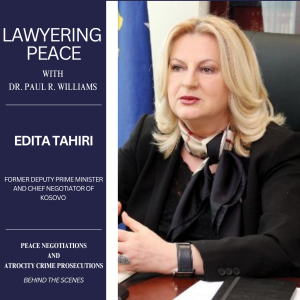
Meet Edita Tahiri, Kosovo's former Deputy Prime Minister and chief negotiator. From leading peace talks during the Rambouillet negotiations to championing gender equality in the Balkans, Edita shares her inspiring story of resilience, diplomacy, and the pursuit of peace. Discover her insights into unifying delegations, advocating for independence, and addressing the ongoing challenges of unfinished peace with Serbia.
Monday Dec 16, 2024
Monday Dec 16, 2024
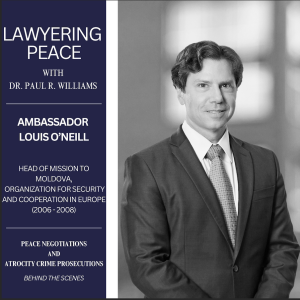
In this episode, Ambassador Lou O’Neill unpacks Moldova’s ongoing struggles with frozen conflicts in Transnistria and Gagauzia, the far-reaching ramifications of Russian influence, and how the war in Ukraine has reshaped the region’s dynamics.
Drawing from his tenure as OSCE Ambassador to Moldova (2006–2008), Lou provides critical insights into Moldova’s October 2024 EU accession and presidential election votes—controversial and closely contested, with EU accession winning by a narrow margin.
Lou reflects on cultural dynamics, offering insights into how Moldova can leverage its EU aspirations to foster unity and progress.
Discover how geopolitical strategies, diplomatic creativity, and evolving contexts could shape Moldova’s future in this pivotal episode.
-----------------
Host & Executive Producer: Dr. Paul R. Williams
Co-Producer & Content Manager: Katie Hetherington
Co-Producer & Creative Manager: Ryan Westlake
Monday Dec 09, 2024
Monday Dec 09, 2024
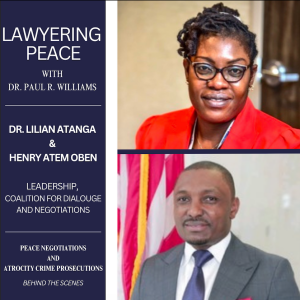
In Part 2 of the conversation with Dr. Lilian Atanga and Henry Atem on the Southern Cameroon conflict, we dive into the 2022 Canada Peace Talks, where the Ambazonia delegation—comprising leaders from various separatist groups—worked to build internal cohesion and present a united front. Their efforts, along with those of the Canadian facilitators, were met with an abrupt withdrawal by the Cameroonian government after three meetings, followed by its denial of ever participating in the talks.
Dr. Lilian Atanga and Henry Atem break down how the Canada process was structured and highlight the critical role of inclusivity in peace negotiations. They also reflect on how the pattern of the government’s actions in peace processes over the years underscore its reluctance to engage in genuine negotiations to settle the conflict.
Tune in for a powerful conversation on this pivotal moment in the Southern Cameroon conflict, the lessons learned, and what lies ahead for the path to peace.
---------------
Host & Executive Producer: Dr. Paul R. Williams
Co-Producer & Content Manager: Katie Hetherington
Co-Producer & Creative Manager: Ryan Westlake
Monday Dec 09, 2024
Monday Dec 09, 2024
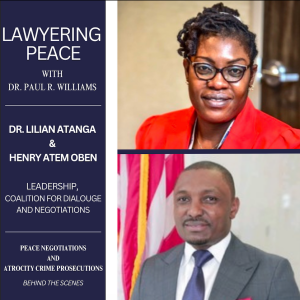
In this episode of the Lawyering Peace podcast, we delve into the complex and ongoing conflict between Anglophone Southern Cameroon (Ambazonia) and the Francophone central government of Cameroon. Rooted in a history of colonization by different powers, the two regions developed distinct cultures. Over decades, this divide has been exacerbated by persistent systemic marginalization and discrimination against Southern Cameroonians. In 2016, these divisions escalated into an armed conflict involving numerous separatist groups and leaving civilians caught in the crossfire.
Joining the discussion are two expert voices from the Board of Directors of the Coalition for Dialogue and Negotiation, a U.S.-based nonprofit dedicated to fostering dialogue and peacebuilding in Cameroon. Dr. Lilian Atanga and Henry Atem Oben provide critical insights into the series of failed peace processes leading up to the 2022 Canada Talks. These include the 2016 teachers' and lawyers' strike, the government’s reneged offer of federalism, the 2019 National Dialogue, and the 2020–2022 Geneva Initiative. Together, they highlight how these efforts reveal the Cameroonian government’s repeated missed opportunities to negotiate a peaceful resolution with Ambazonia.
The episode delves into how the Ambazonia delegation, supported by the Coalition for Dialogue and Negotiation, prepared for the 2022 Canada Talks, and explores the delegation’s positions on key issues such as self-determination, disarmament, and accountability for atrocity crimes.
Tune in for a deep dive into the history, challenges, and opportunities of this conflict. Stay tuned for Part 2, where we analyze the 2022 Canada Peace Talks and discuss what’s next for Ambazonia.
--------------
Host & Executive Producer: Dr. Paul R. Williams
Co-Producer & Content Manager: Katie Hetherington
Co-Producer & Creative Manager: Ryan Westlake
Wednesday Nov 20, 2024
Wednesday Nov 20, 2024
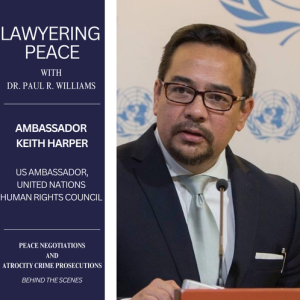
In this compelling episode of Lawyering Peace, Ambassador Keith Harper, former U.S. Ambassador to the UN Human Rights Council, explores the intricate relationship between human rights and the establishment of durable peace. Drawing from his extensive experience in global diplomacy, Ambassador Harper discusses how the promotion and protection of human rights are essential pillars of lasting peace. He delves into the challenges of integrating human rights into peace negotiations, especially when accountability is at stake, offering real-world examples from South Sudan to Sri Lanka.
Through an engaging conversation, Ambassador Harper addresses the role of the UN Human Rights Council and Commissions of Inquiry in influencing peace processes, and provides insights into how the international community can better incorporate human rights into peacebuilding efforts.
Tune in for a deep dive into the critical, though often imperfect, work of intertwining human rights with peace.
----------------
Host & Executive Producer: Dr. Paul R. Williams
Co-Producer & Content Manager: Katie Hetherington
Co-Producer & Creative Manager: Ryan Westlake
Wednesday Oct 09, 2024
Wednesday Oct 09, 2024
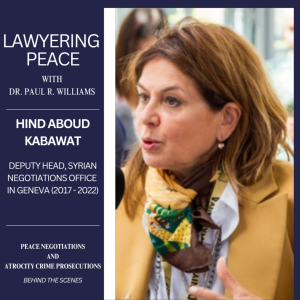
In this powerful episode, we sit down with Hind Kabawat, Deputy Head of the Syrian Negotiation Commission Office in Geneva. Hind shares her insights from growing up in Damascus to becoming a key figure in the Geneva peace talks.
Hind delves into the profound challenges faced during the Syrian conflict, from the brutal dictatorship to the devastating chemical attacks in Ghouta. She recounts the harrowing experiences of Syrian activists and civilians who have endured unimaginable suffering, and how the Arab Spring ignited a flame of hope among Syrians longing for change.
As a lawyer and peacebuilder, Hind emphasizes the importance of women's involvement in peace negotiations. She discusses her pioneering efforts to create a women's consultation, overcoming opposition from male colleagues, and ultimately securing a 30% quota for women’s representation in the opposition delegation during the Syrian peace negotiations. Hind illustrates how these efforts brought together women from diverse backgrounds to push for justice, human rights, and the inclusion of their voices in shaping Syria’s future.
Listeners will gain insight into some of the challenges faced by the Syrian opposition delegation, including the difficulty of negotiating with actors actively killing their families and friends. Hind also provides insights into the delegation’s strategic use of media, and the critical roles played by women as well as grassroots movements in sustaining dialogue and preparing for a future peace. Hind candidly shares her views on the international community’s role, the failures of the Geneva talks, and the persistent need for transitional justice in Syria.
Hind’s story is a testament to the resilience and determination required to pursue peace in the face of adversity. Her message is clear: peace is not just about negotiations at the table; it’s about fostering a culture of dialogue, inclusion, and justice that transcends political will. This episode is a must-listen for anyone interested in the dynamics of peacebuilding, the power of women in conflict resolution, and the ongoing struggle for a peaceful future in Syria.
--------------
Host & Executive Producer: Dr. Paul R. Williams
Co-Producer & Content Manager: Katie Hetherington
Co-Producer & Creative Manager: Ryan Westlake
Thursday Oct 03, 2024
Thursday Oct 03, 2024
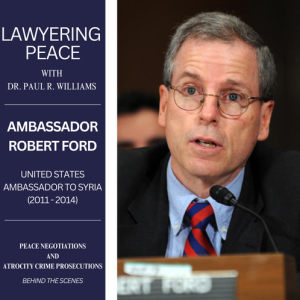
In part two of our conversation with Robert Ford, former U.S. Ambassador to Syria, we delve into the turbulent years of 2011-2014, a period marked by the breakdown of dialogue, escalating conflict, and the Geneva Peace Talks.
Key Topics Covered:
The Role of Embassies: Ford emphasizes the importance of neutrality in diplomatic missions, highlighting how U.S. involvement often complicates matters.
Dialogue Gone Wrong: The attempted dialogue between the Syrian government and protesters was abruptly derailed, leading to a full-blown conflict and a call for a ceasefire by the UN.
The Geneva Peace Talks: Ford provides an insider’s view of the Geneva process, where the Syrian opposition and government were supposed to negotiate a transitional government. However, the talks quickly fell apart when Assad’s regime refused to discuss political transition, focusing only on security arrangements.
Challenges of Negotiation: Ford discusses the difficulty of overcoming a “no” in negotiations, especially when one side has a military advantage. This lack of compromise led to the collapse of the peace talks.
Lessons for Mediators: Drawing from his experiences, Ford offers practical advice on coalition-building and the pitfalls of making promises that can’t be kept—a mistake the U.S. made repeatedly, damaging its credibility.
Tune in to this episode for a deep dive into the complexities of the Syrian crisis and the lessons that can be learned for future peace negotiations.
----------------
Host & Executive Producer: Dr. Paul R. Williams
Co-Producer & Content Manager: Katie Hetherington
Co-Producer & Creative Manager: Ryan Westlake
Thursday Oct 03, 2024
Thursday Oct 03, 2024
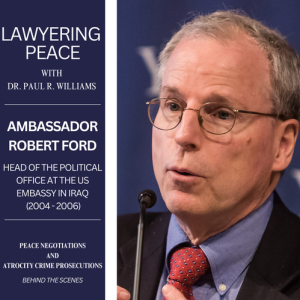
This episode of Lawyering Peace features part one of a conversation with Ambassador Robert Ford, who led the political office in the U.S. Embassy in Iraq from 2004 - 2006, during a pivotal time in the country’s history. Charged with helping Iraq rebuild its government, Ford offers a candid reflection on the challenges and lessons learned from the 2005 Iraqi elections—an event that was as much about international diplomacy as it was about democracy.
Key takeaways from the episode:
UN-led Process: The 2005 Iraqi elections were spearheaded by the UN, but the U.S. played a significant role in ensuring security, highlighting the complexities of balancing international and local dynamics.
Election Dynamics: The setup of the elections was influenced by various agendas, leading to unintended consequences, such as the Sunni boycott, which exacerbated existing political tensions.
The Importance of Communication: Ford underscores the critical need for effective communication within and between different U.S. entities, such as the military and the embassy, to navigate the delicate post-conflict environment.
Strategic Decisions: From promoting federalism to handling oil profits, Ford discusses the nuanced negotiations and strategic decisions that shaped Iraq’s transition from authoritarianism to democracy.
Robert Ford's insights offer a profound understanding of how elections, when not complemented by broader political processes, can sometimes deepen divides rather than bridge them.
Tune in to this episode for a deep dive into the realities of post-conflict elections and the lessons that can inform future peacebuilding efforts.
Friday Sep 27, 2024
Friday Sep 27, 2024
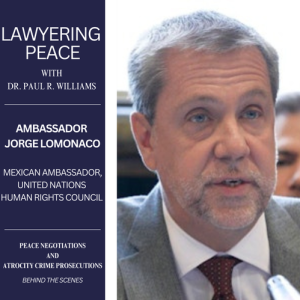
In this episode of Lawyering Peace, we sit down with Ambassador Jorge Lomanco, a distinguished diplomat from Mexico who has served as an ambassador to both the United Nations Human Rights Council and the Organization of American States. As the chief negotiator of the Treaty on the Prohibition of Nuclear Weapons, for which he and his team were awarded the Nobel Peace Prize, Ambassador Lomanco brings a wealth of experience to the table.
The conversation dives deep into the critical role human rights play in achieving durable peace. Ambassador Lomanco discusses the moral obligation to prioritize human rights at every level of peace negotiations, emphasizing that the protection of these rights is essential for durable peace. He provides insights into how human rights have been both pivotal and sidelined in various peace processes around the world, from transitions in Latin American states to South Africa's peace process.
Ambassador Lomanco also tackles the challenges of centering human rights in peace negotiations, particularly when dealing with regimes that have committed widespread abuses. He explores the often difficult choices between offering amnesty to dictators and the need for accountability, sharing examples from Venezuela, Uruguay, Chile, Argentina, and beyond.
Moreover, the episode sheds light on the role of the UN Human Rights Council in conflict situations, highlighting its responsibilities, tools, and the importance of remaining engaged to prevent the escalation of violence. Ambassador Lomanco shares his views on the impact of Commissions of Inquiry and the future intersection of peace and human rights, stressing the major impact of political will and international cooperation on the effectiveness of UN mechanisms.
Amb. Lomanco reflects on the significant contributions of the UN and regional bodies like the Organization of American States (OAS) in shaping a world where human rights are increasingly protected, even amidst ongoing challenges. This episode offers a profound look at the complexities of integrating human rights into peace processes and the ongoing efforts needed to ensure lasting peace.
Thursday Sep 19, 2024
Thursday Sep 19, 2024
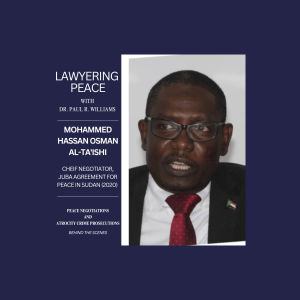
Dive into the riveting behind-the-scenes story of Sudan’s 2020 Juba Peace Agreement negotiations with Mohammed al-Ta'ishi, chief negotiator for the Sudanese Transitional Government and key architect of the Agreement. In this must-listen episode of Lawyering Peace, al-Ta'ishi reveals the challenges and triumphs of negotiating peace amidst Sudan's complex military and civilian dynamics.
From his roots in South Darfur to leading pivotal peace talks for his country, al-Ta'ishi offers a unique perspective on the intricate art of negotiation. Learn how he managed an eclectic civilian-military delegation, dealt with nefarious actors, navigated power-sharing dilemmas, and championed transitional justice. His insights provide a critical understanding of the current conflict in Sudan and offer valuable lessons in negotiation and peacebuilding.
Mohammed al-Ta'ishi's story is a testament to the power of determination, good faith, and the relentless pursuit of peace. Don't miss this chance to hear from one of the chief architects of the Juba Agreement and gain a deeper understanding of Sudan's journey toward peace.
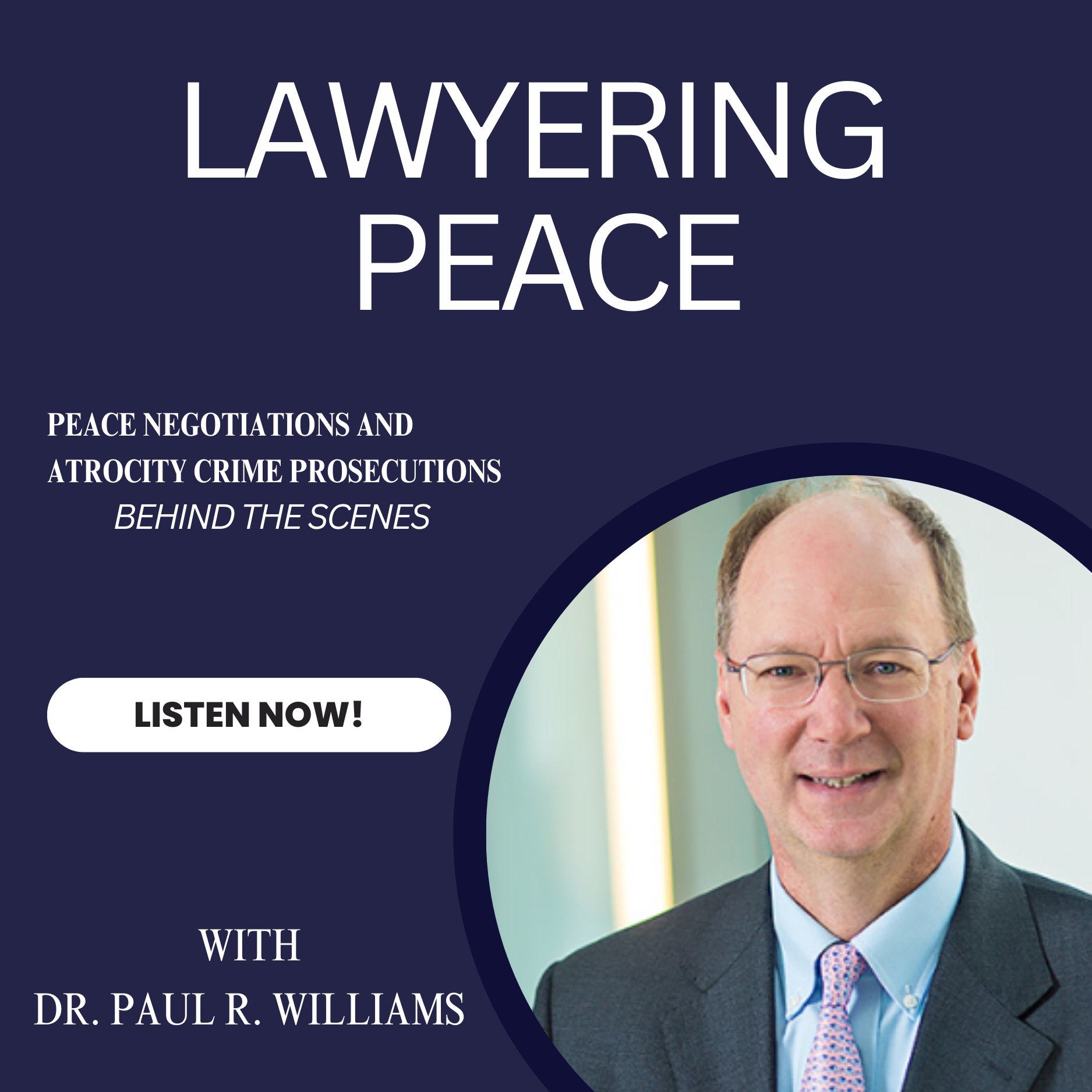
Lawyering Peace Interview Series
Join Dr. Paul R. Williams, as he delves into the realm of peace negotiations, diplomacy, and international criminal justice with guests including seasoned peace negotiators and mediators, legal and strategic advisors, former ambassadors, prosecutors, and veterans of international criminal tribunals. Through the conversations, Dr. Williams and his guests shed light on the hurdles and triumphs of peace talks, the intricacies of negotiation strategies, the rigorous pursuit of justice in the aftermath of atrocities, and, in some instances, the lessons learned from failure. This series is a platform for the insights and wisdom of the friends and colleagues that Dr. Williams has had the honor of working with for over 30 years in the field, and offers an insider’s perspective on the complex dynamics of seeking justice and durable peace on the international stage.